

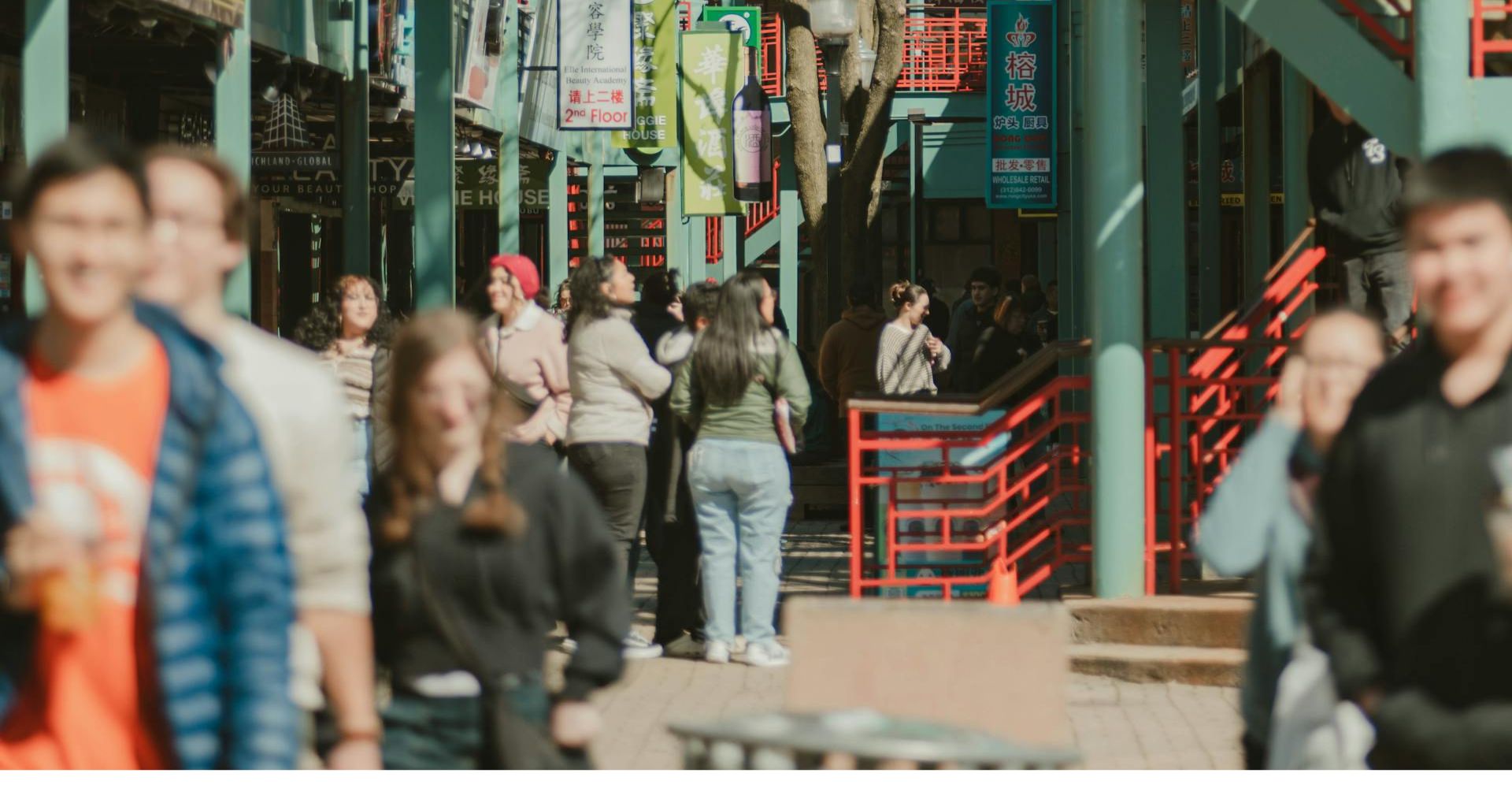

Chicago's Chinatown starts announcing itself before you reach it. Walk south from the Loop toward Cermak Road and you'll begin to notice the shift. The signage changes, the aromas shift, and then the neighborhood's iconic red gate comes into view. This is one of the city's most concentrated stretches of regional Chinese cooking, built across generations by families who brought their kitchens with them.
The neighborhood centers on Wentworth Avenue and Cermak Road, just south of downtown and about a 10-minute drive from the Loop, or a quick ride on the Red Line to Cermak-Chinatown. Within a few blocks, you'll find Cantonese dim sum parlors that have been feeding Sunday crowds since before the nearby expressway existed, hand-pulled noodle counters, Sichuan restaurants that draw diners from across the metro, and bakeries that open early enough to catch the morning regulars.
The easier challenge isn't finding something to eat. It's knowing what to eat first.
A Neighborhood Built on Regional Cooking
What makes Chicago's Chinatown worth more than a single visit is that it isn't a monolith. The early Cantonese immigrants who arrived in the 1800s established the neighborhood's foundation, but the decades since have brought restaurants representing Xi'an's Silk Road flavors, Sichuan's numbing heat, and Hong Kong's pastry culture. Each wave of immigration added something, and most of it is still here.
Walking the neighborhood with that context changes what you notice. The herbal medicine shops between Archer and Cermak. The differences between a dim sum brunch on Saturday and a weeknight bowl of noodle soup. The fact that Lao Sze Chuan and a Taiwanese BBQ counter can coexist thirty feet apart in Chinatown Square.
The best approach is to treat the neighborhood as a tasting progression rather than a single destination. Here's how it tends to unfold.
Cantonese Roots: Dim Sum and Seafood Staples
Cantonese cuisine built America's early relationship with Chinese food, and it's still the right place to start in Chinatown. The dishes — light, savory, calibrated for balance — make sense as an introduction before the region's bolder styles come into focus.
Phoenix Restaurant on Archer Avenue is the Cantonese anchor. The dining room runs loud on weekend mornings, when families settle into the round tables and carts begin their circuits: shrimp dumplings, Peking duck, cheung fun, turnip cake. Go before 11am on a Saturday if you want first pick of the baskets — by noon, the room is full and the best selections are already circulating their second round.
MingHin Cuisine, inside Chinatown Square, offers a more contemporary take on the same tradition. The BBQ pork buns and seafood in black bean sauce are reliably ordered by regulars who treat it as a working lunch stop. Both restaurants are worth knowing, and they tell the story of what Cantonese cooking looks like across two different eras of the neighborhood.
Northern Noodles: Xi'an's Hand-Pulled Plates
Xi'an cuisine represents a different arc of Chinese cooking history. It's shaped by the Silk Road, with flavors that carry traces of Middle Eastern spice and seasoning alongside more familiar profiles. The staple dish at Xi'an Cuisine is biang biang noodles: wide, chewy ribbons made by hand and served with chili oil, garlic, and minced meat. You can watch the prep from the front of the restaurant as the noodles are stretched and slapped against the counter before going into the pot.
This is the spot people tend to discover on their third or fourth trip to Chinatown and immediately regret not finding sooner. The menu is narrow and straightforward. The noodle soup is rich and deeply spiced. Order the biang biang noodles first, then work your way into the broth dishes on subsequent visits.
Sichuan Spice: Where Heat Meets Complexity
Sichuan cuisine is built on a specific sensation called málà, the combination of numbing Sichuan peppercorn and sharp chili heat, and it produces dishes that are layered in ways that straight spice alone can't replicate.
Lao Sze Chuan, on the main stretch of Wentworth Avenue, is the restaurant that put Chicago's Chinatown on the national food map and still draws the longest lines. Chef Tony Hu (who locals have called the unofficial Mayor of Chinatown) built the place into a flagship for the cuisine. The stir-fried chili chicken is the order most tables default to; the mapo tofu and eggplant in garlic sauce are quieter but just as essential.
Arrive early or expect a wait. Weekday lunch is the window when the room is full without being overwhelming.
Hot Pot, Skewers, and the Late-Night Window
Part of what makes Chinatown worth staying for is its post-dinner life. Hot pot restaurants, where your table gets its own burner and you cook meats, vegetables, and noodles in a shared broth, are best treated as a group activity. The decision-making involved (spicy broth or herbal? which proteins?) becomes part of the meal in a way that solo dining misses.
For late-night eating, Triple Crown in Chinatown Square stays open well past midnight and draws the crowd that flows in after concerts and shows at nearby venues. The dumplings and noodle platters hold up at 1am the way they do at 7pm, which is why the place has regulars who come specifically at closing time.
Sweet Stops: Bakeries, Boba, and Dessert
Chiu Quon Bakery, Chicago's oldest Chinese bakery, is on Wentworth a few doors from some of the neighborhood's busiest restaurants. The Macanese egg tarts, a result of Portuguese colonial influence on Hong Kong's pastry culture, are the thing to order if you're choosing one item. The pork buns are close behind. Most people who stop for a single pastry leave with a small box.
Boba tea is available at multiple spots throughout the neighborhood; the drink has become a routine part of how people pace a longer Chinatown afternoon, particularly in warmer months when the outdoor plaza at Chinatown Square gets busy.
For something more substantial, Moon Palace and Yummy Yummy Noodles both do soup dumplings and wonton soups that function well as a closing course after an afternoon of grazing. Chicago Magazine once ranked Yummy Yummy's noodles the city's best. It's a designation that still holds up, and locals tend to agree.
Chinatown Square: Where the Neighborhood Centers
The two-story open-air plaza at Chinatown Square sits at the convergence of most of what makes the neighborhood worth an afternoon. MingHin and Triple Crown anchor the dining side; food court stalls along the interior level offer Sichuan skewers, Taiwanese BBQ, and rotating daily specials that don't appear on any printed menu.
Between meals, the plaza itself is worth walking slowly. The Chinese zodiac statues along the perimeter are where first-time visitors tend to stop and linger. The herbal shops and tea houses tucked between the restaurant fronts are where the neighborhood's longer history is still in active use.
How to Approach Chinatown on Your Own
A few things that make the difference between a good visit and a great one:
Start on Wentworth Avenue. It's the neighborhood's spine, and the concentration of restaurants between Cermak and Archer gives you the clearest read on what's available before you commit to a table.
Go early for dim sum. Phoenix Restaurant's weekend brunch fills quickly. By 11am the room is loud and the cart selection is thinner. Before 10am, you get the full spread and a more manageable crowd.
Don't skip Chinatown Square. Visitors who stay on Wentworth miss the second layer of the neighborhood. The square has newer restaurants, the food court stalls, and a different energy. It's more casual, and in many cases, where locals actually eat on weekdays.
Bring cash and ask questions. Several family-run spots are cash-only, and menus sometimes lean heavily on Chinese-language options. Asking what regulars order (or pointing at what someone nearby has) tends to work better than guessing from a translated menu.
Plan for more than one meal. Cantonese dim sum for brunch, hand-pulled noodles in the afternoon, Sichuan dinner, and Triple Crown late-night is not an unusual Chinatown day for people who know the neighborhood well. The geography makes it possible since everything is within a quarter mile.
Chicago's Chinatown covers a small footprint, but the breadth of what's cooking here — across five distinct regional traditions, across a century and a half of immigrant kitchens — is genuinely rare. Come with time, come hungry, and move slowly enough to find the second and third layers.